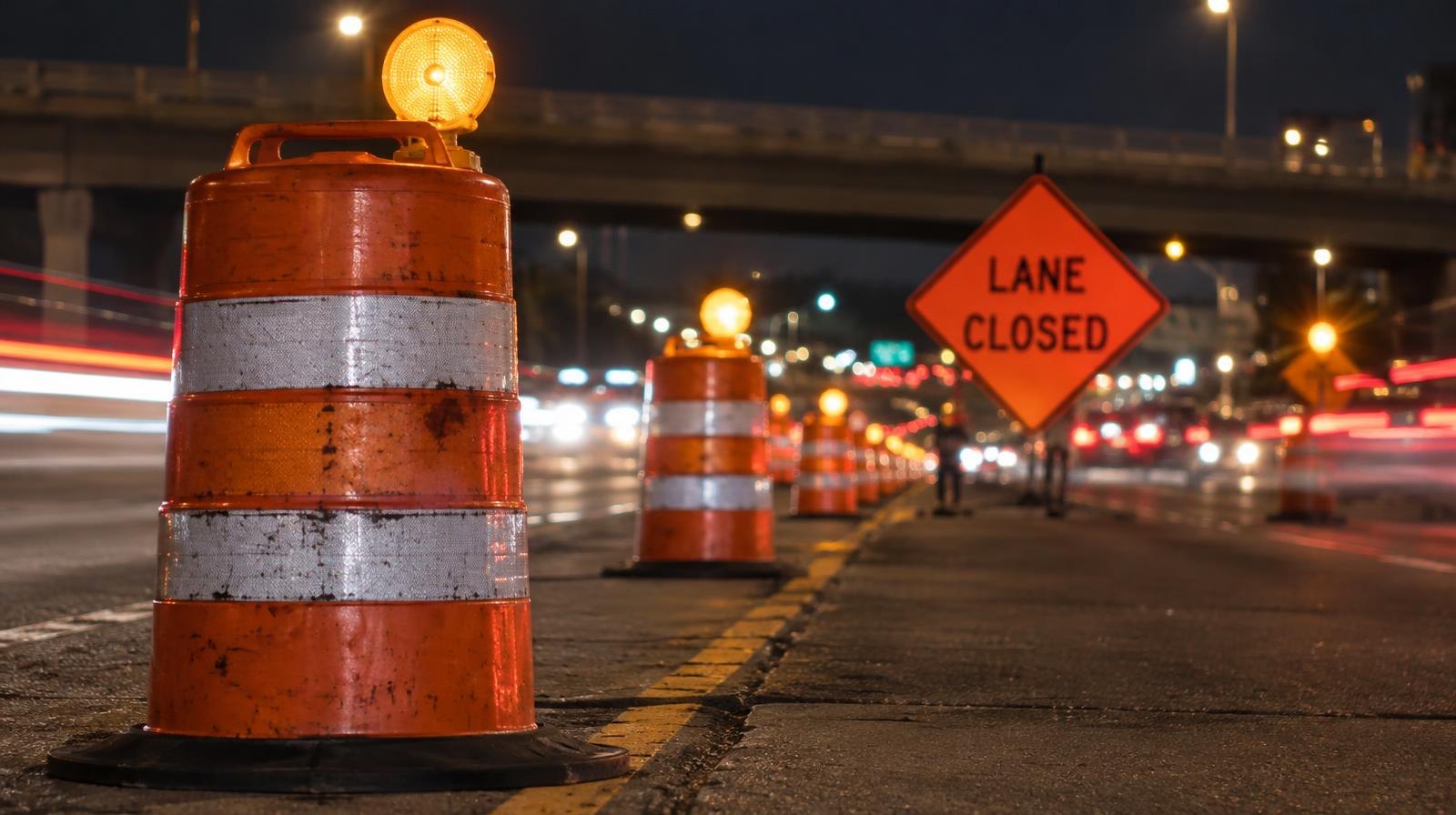
Nightly lane closures on I-75 between Lyons Road and Pennyroyal Road are restricting traffic in both directions through November. A narrowed lane shift on the same stretch will stay in place through spring 2027.
The closures run from 7:30 p.m. to 5 a.m. and began the week of July 6, according to the Journal-News. The stretch sits in Montgomery and Warren counties and cuts through Springboro and Miami Township, south of Dayton.
The overnight work is part of a $55.1 million widening project that will add a lane in each direction on I-75 between I-675 and Pennyroyal Road, according to Loryn Bryson, spokesperson for Ohio Department of Transportation (ODOT) District 7, as the Journal-News reported in September. WHIO first reported the lane-closure plans in June. The full project also includes full reconstruction of the existing travel lanes, adjusting lane transitions at on- and off-ramps, signal changes on Austin Boulevard and guardrail improvements. ODOT expects completion in fall 2029.
Even after the nightly closures end in November, drivers will face a shifted traffic pattern on the same stretch. Northbound I-75 is down to three lanes between Lyons Road and Pennyroyal Road, with traffic pushed to the exterior right side of the roadway. The left lane on southbound I-75 is narrowed to 11 feet.
That configuration will remain through spring 2027, when ODOT plans another lane shift so crews can install a barrier and temporary pavement for southbound traffic.
Crashes along the stretch have raised safety concerns. The Ohio State Highway Patrol responded to 24 crashes between Lyons Road Bridge and Pennyroyal Lane Bridge since July, according to a Journal-News report published Sept. 9.
Six resulted in injury.
Fourteen occurred in the active work zone, which at the time covered only the northbound lanes. In August alone, following lane shifts implemented at the end of July, the patrol responded to 11 crashes in the stretch, seven in the work zone.
Lt. Dallas Root, Dayton Post commander of the Ohio State Highway Patrol, said in September that crash numbers tend to spike when a new traffic pattern begins and then fall as drivers adjust. "Until they get used to the new traffic pattern and time things a little bit better, there will be incidents," Root told the Journal-News. "They'll pick up again at the next change."
The next change is the spring 2027 lane shift, which will introduce a barrier and temporary pavement for southbound traffic, resetting the pattern drivers have just learned.