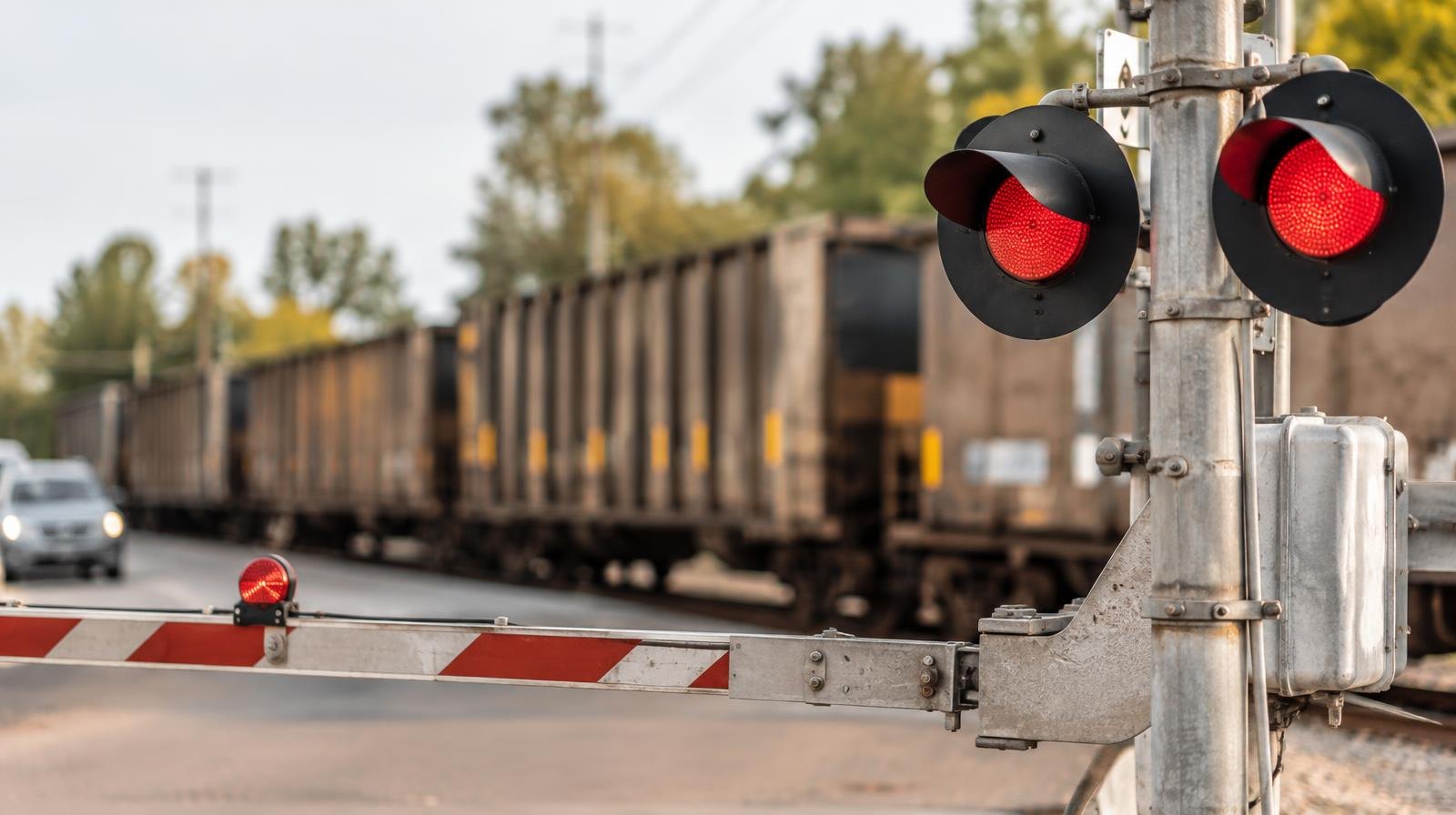
Stopped trains are adding up to seven minutes to Sharonville Fire Department emergency response times, Fire Chief Dan Sunderman said, a problem he called sharply worse in recent years.
Sunderman's comments, reported by WCPO, came days after a deadly house fire in nearby Lockland on Sunday, Oct. 18, where a stopped Norfolk Southern train delayed firefighters by about seven minutes. An elderly woman died in that fire.
"In the last five or six years, clearly the trains are getting longer. We're seeing more stopped trains, and the crossings are being blocked for a longer period of time," Sunderman told WCPO.
The Sharonville department uses a sensor-based monitoring system called TRAINFO to track blockages at five crossings in the city. Crews have used it for about 18 months. Status boards sit at bay doors in the station, and the system runs on onboard computers in trucks and ambulances and on some firefighters' phones, Sunderman said.
Sunderman said stopped trains add three to four minutes to response times on average. Fully stopped trains can push that to five, six or seven minutes. The department's new fire reporting software now includes a category to track those delays.
Sunderman said delays matter because fires can grow rapidly. For cardiac arrest patients, each minute without CPR reduces the odds of survival by about 10%, according to the American Heart Association.
Hamilton County's mutual aid agreement helps. Sunderman said any department in the county will respond into any other municipality, which can offset delays caused by blocked crossings.
That agreement was tested Sunday, Oct. 18, in Lockland. A Norfolk Southern train had been parked across crossings since about 8 a.m., according to Lockland Fire Chief Doug Wehmeyer.
When crews were dispatched to a house fire on the 400 block of Patterson Avenue around 9:30 a.m., the train was still there. A trip that normally takes 30 seconds took seven minutes.
Crews from Reading arrived first and pulled an elderly woman from a bedroom. She later died. The Hamilton County Coroner identified her as 89-year-old Marian Haefner, WCPO reported.
Norfolk Southern said in a statement to WCPO that it is looking into the incident and "makes every effort to avoid affecting communities with a stopped train."
Ohio ranks third nationally in reported blocked railroad crossings so far in 2026, according to Federal Railroad Administration (FRA) data cited by WCPO. Hamilton and Butler counties have each logged 26 reported instances where first responders could not cross tracks. Reported crossing blockages lasted from under 15 minutes to more than one day.
U.S. Rep. Warren Davidson, who represents Ohio's 8th District, has introduced the Railroad Responsibility Act, H.R. 341. The bill would lift federal preemption and let state laws limiting how long trains can block crossings take effect. It has the status of "introduced" and has not passed.
Ohio had a state law addressing blocked crossings, but the Ohio Supreme Court struck it down in 2022, ruling that federal law preempts it.
An FRA-funded study of the TRAINFO system found that using real-time crossing data could potentially eliminate more than 90% of crossing-related responder delays under the conditions studied. The study noted that effectiveness depends on human factors like available responder attention and dispatcher workflow complexity.