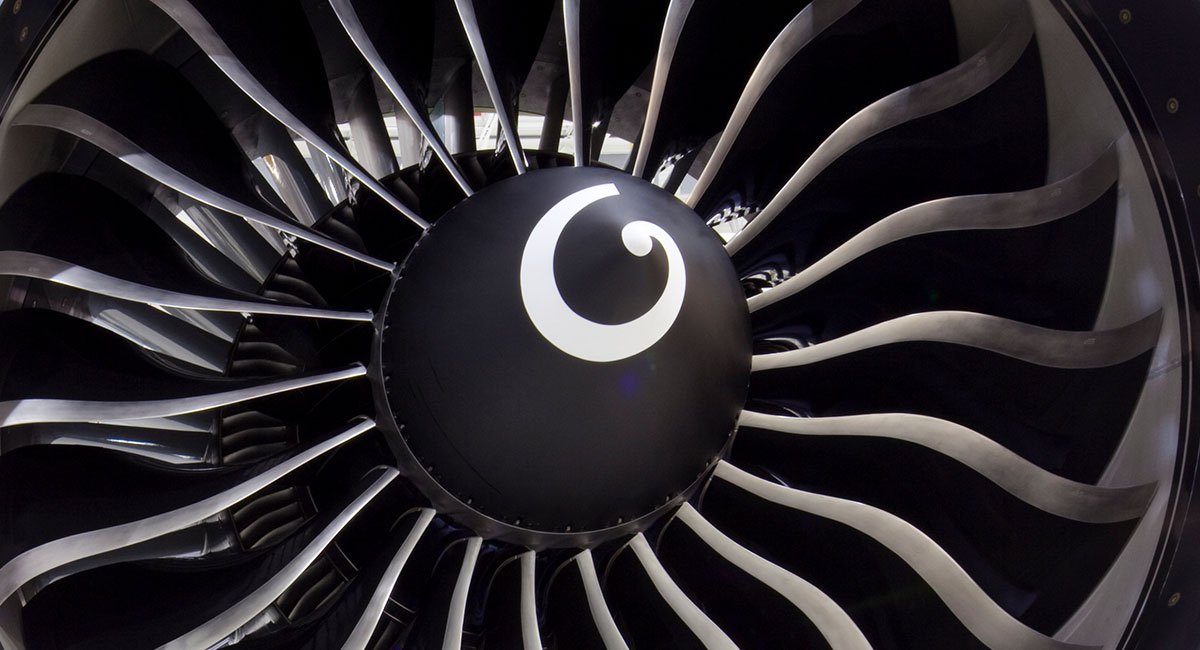
CFM International and Airbus unveiled the livery of a modified A380 on July 21, at the Farnborough International Airshow in England. The plane will serve as the flying testbed for the RISE Open Fan engine, which is being developed at GE Aerospace's Evendale campus.
CFM International, the 50-50 joint venture between GE Aerospace and France's Safran Aircraft Engines, is headquartered at One Neumann Way in Evendale. More than 2,000 CFM engineers across multiple sites are working on the RISE program, according to GE Aerospace.
Open Fan ditches the traditional engine casing, exposing a larger fan that produces less drag and burns at least 20% less fuel than current-generation engines on commercial routes, according to CFM. The architecture also ingests more than 50% less dust than a conventional ducted engine, GE Aerospace Vice President of Future of Flight Engineering Arjan Hegeman said at a pre-Farnborough briefing on July 18.
"We're testing real, full-size Open Fan hardware, showing real progress and a renewed ambition from CFM to advance the RISE program and deliver the vital technology step-changes for durability and efficiency to power the future of air travel," Hegeman said in a CFM press release issued July 18.
Three days before the livery reveal, CFM announced that the Open Fan and compact core modules had passed their Preliminary Design Reviews. That clearance means parts manufacturing can now begin for the first ground-test demonstrator engine, Safran Aircraft Engines engineering executive Pierre Cottenceau said at the same briefing.
Since CFM launched the RISE program in 2021, teams have completed roughly 500 test campaigns, 400 hours of wind-tunnel testing, and more than 5,000 cycles of endurance and dust-ingestion tests, according to Aviation Week.
CFM President and CEO Gaël Méheust said the program balances innovation with lessons drawn from more than 1.4 billion engine flight hours across CFM's existing fleet.
Flight tests aboard the A380 are expected by the end of the decade. FlightGlobal reported that Hegeman described the target as "around 2029."